

Introduction
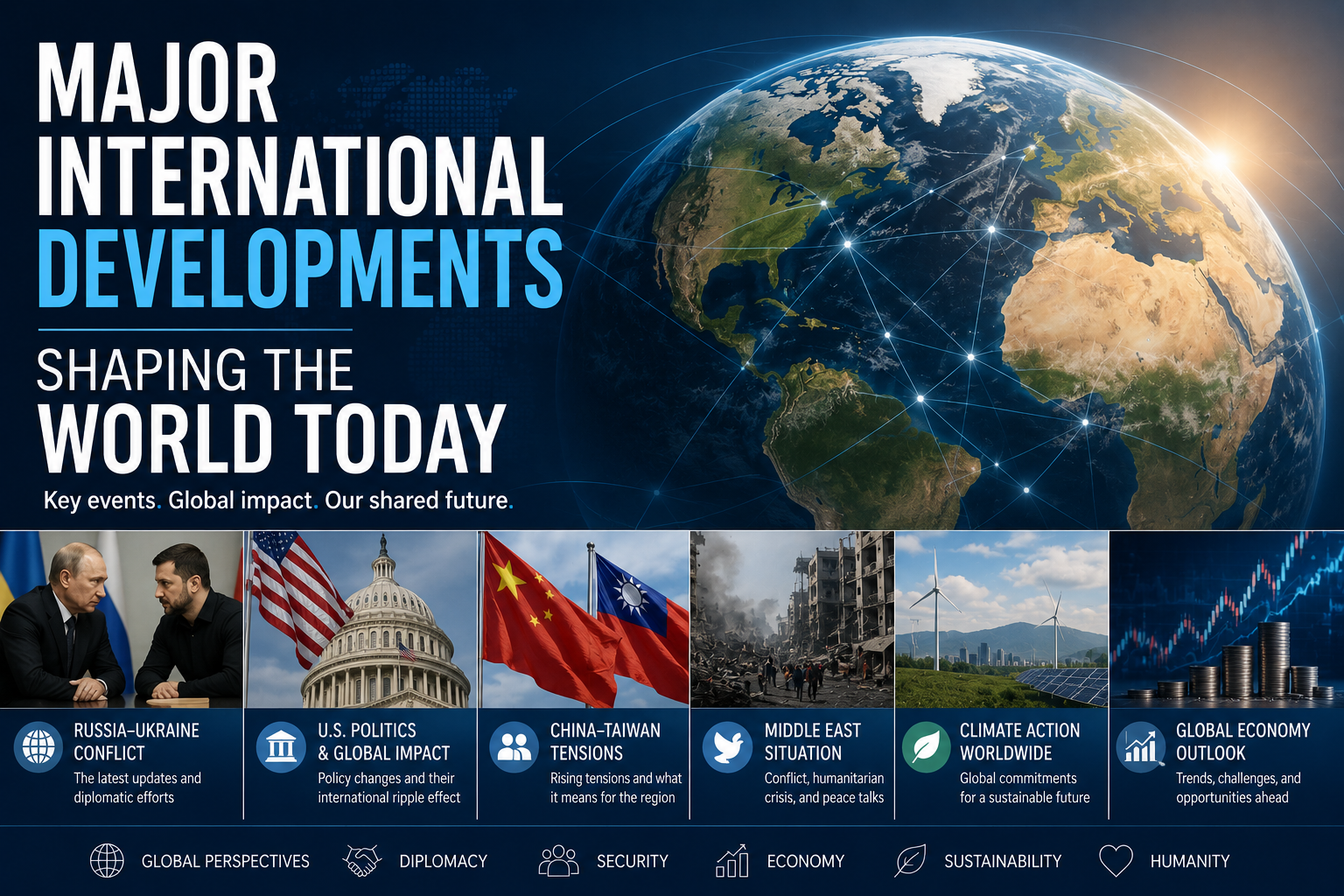
The world is experiencing a period of rapid transformation driven by political shifts, economic developments, technological innovation, environmental concerns, and evolving geopolitical relationships. Nations across the globe are facing new opportunities and challenges that are reshaping international affairs and influencing the daily lives of billions of people.
From economic reforms and trade agreements to climate initiatives and technological advancements, major international developments continue to define the direction of global progress. Governments, businesses, and international organizations are working to adapt to an increasingly interconnected and complex world.
As global events unfold, understanding the key developments shaping today’s world has become more important than ever. These changes impact international stability, economic growth, security, sustainability, and the future of global cooperation.
The Changing Global Political Landscape
Political developments remain one of the most influential factors affecting international relations. Countries are reassessing diplomatic strategies, strengthening alliances, and addressing emerging challenges that require coordinated responses.
Shifting Diplomatic Alliances
In recent years, nations have increasingly sought strategic partnerships to strengthen economic and security interests.
Key objectives of these alliances include:
- Enhancing regional stability
- Expanding trade opportunities
- Addressing security concerns
- Promoting technological cooperation
- Supporting sustainable development
Diplomatic engagement continues to play a crucial role in resolving conflicts and fostering international collaboration.
Growing Importance of Multilateral Cooperation
Many global challenges cannot be addressed by individual countries alone. International organizations and multinational forums remain essential platforms for dialogue and collective action.
Areas requiring multilateral cooperation include:
| Global Issue | Importance |
|---|---|
| Climate Change | Environmental sustainability |
| Public Health | Global disease prevention |
| Trade and Commerce | Economic growth |
| Cybersecurity | Digital protection |
| Energy Security | Market stability |
| Humanitarian Assistance | Crisis response |
Countries are increasingly recognizing the value of working together to address shared concerns.
Economic Trends Influencing Global Markets
Economic developments remain at the center of international discussions as governments seek to promote growth while managing risks.
Inflation and Cost-of-Living Challenges
Many economies continue to navigate inflationary pressures that affect households and businesses.
Factors contributing to rising costs include:
- Supply chain disruptions
- Energy market fluctuations
- Labor shortages
- Increased demand for goods and services
- Geopolitical uncertainty
Policymakers are implementing various measures to stabilize prices and support economic recovery.
Global Trade Transformation
International trade remains a critical engine of economic growth. However, changing market conditions are influencing how countries approach trade relationships.
Recent trends include:
- Supply chain diversification
- Regional trade agreements
- Digital commerce expansion
- Increased focus on domestic production
- Investments in logistics infrastructure
These developments are helping countries strengthen economic resilience while maintaining global connectivity.
Investment in Emerging Markets
Emerging economies continue to attract international investment due to their growing consumer markets, expanding infrastructure, and technological potential.
Key investment sectors include:
- Renewable energy
- Manufacturing
- Technology services
- Telecommunications
- Transportation infrastructure
Such investments contribute to job creation and long-term economic development.
Technological Innovation Reshaping the World
Technology has become one of the most powerful forces driving international change.
Artificial Intelligence and Automation
Artificial intelligence (AI) is transforming industries across the globe. Businesses are using AI to improve efficiency, enhance customer experiences, and develop innovative products.
Applications of AI include:
- Healthcare diagnostics
- Financial services
- Manufacturing automation
- Transportation systems
- Educational technologies
Governments are also discussing regulatory frameworks to ensure responsible and ethical use of AI technologies.
Digital Transformation
The rapid expansion of digital infrastructure is changing how people work, communicate, and conduct business.
Benefits of digital transformation include:
- Increased productivity
- Greater access to information
- Expanded online services
- Improved business operations
- Enhanced global connectivity
Countries investing in digital innovation are positioning themselves for future economic growth.
Cybersecurity Challenges
As digital systems become increasingly important, cybersecurity has emerged as a major international concern.
Governments and organizations are investing in:
- Cyber defense systems
- Data protection measures
- Digital infrastructure security
- International cyber cooperation
- Public awareness initiatives
Protecting digital assets is now considered a critical component of national security.
Climate Change and Sustainability Initiatives
Environmental challenges continue to influence international policymaking and economic planning.
Global Climate Commitments
Many nations have announced ambitious targets aimed at reducing greenhouse gas emissions and promoting sustainable development.
These commitments often focus on:
- Renewable energy adoption
- Carbon reduction strategies
- Sustainable transportation
- Green infrastructure projects
- Environmental conservation
International cooperation remains essential for achieving meaningful climate progress.
Renewable Energy Expansion
The transition toward cleaner energy sources is accelerating worldwide.
Major renewable energy investments include:
| Renewable Source | Key Benefits |
|---|---|
| Solar Energy | Low emissions and scalability |
| Wind Energy | Sustainable electricity generation |
| Hydropower | Reliable renewable power |
| Geothermal Energy | Consistent energy supply |
| Green Hydrogen | Future clean fuel solution |
Renewable energy development is creating new industries and employment opportunities while reducing dependence on traditional fossil fuels.
Sustainable Economic Growth
Governments are increasingly integrating sustainability into economic planning.
Key priorities include:
- Green technology innovation
- Resource efficiency
- Circular economy practices
- Sustainable agriculture
- Climate resilience investments
These initiatives aim to balance economic growth with environmental protection.
Global Security and Stability Concerns
Security remains a major focus for policymakers worldwide.
Regional Conflicts and Diplomacy
Various regions continue to experience tensions that require diplomatic engagement and conflict-resolution efforts.
International leaders are working to:
- Promote peaceful dialogue
- Support humanitarian assistance
- Prevent escalation of conflicts
- Strengthen regional cooperation
- Protect civilian populations
Diplomatic solutions remain essential for long-term stability.
Counterterrorism and Security Cooperation
Countries continue to collaborate on addressing security threats through intelligence sharing, law enforcement cooperation, and coordinated policy responses.
Areas of focus include:
- Border security
- Cybersecurity threats
- Organized crime prevention
- Counterterrorism efforts
- Maritime security
International partnerships play a crucial role in maintaining global security.
Public Health Developments
Public health remains a priority following lessons learned from recent global health crises.
Strengthening Healthcare Systems
Governments are investing in healthcare infrastructure to improve preparedness and resilience.
Key initiatives include:
- Hospital modernization
- Medical workforce development
- Digital health technologies
- Disease surveillance systems
- Emergency response planning
These efforts aim to enhance healthcare accessibility and effectiveness.
Global Health Cooperation
International health organizations and governments continue to collaborate on disease prevention, research, and emergency response initiatives.
Cooperation helps improve:
- Vaccine distribution
- Medical research
- Public health monitoring
- Crisis management
- Healthcare accessibility
Strong health systems contribute to both social and economic stability.
The Rise of Emerging Global Powers
Several countries are increasing their influence in international affairs through economic growth, technological advancement, and strategic diplomacy.
Economic Expansion
Emerging economies are becoming increasingly important contributors to global growth.
Factors driving their rise include:
- Growing populations
- Expanding consumer markets
- Industrial development
- Infrastructure investments
- Technological innovation
Their growing influence is reshaping global economic dynamics.
Increased Global Participation
Many emerging nations are taking larger roles in international organizations and multilateral discussions.
This increased participation contributes to:
- Diverse policy perspectives
- Broader international cooperation
- Enhanced regional representation
- Greater economic integration
As global power becomes more distributed, international governance structures continue to evolve.
Future Challenges and Opportunities
While significant challenges remain, the world also faces tremendous opportunities for progress.
Key Challenges Ahead
- Economic uncertainty
- Climate change impacts
- Energy security concerns
- Cybersecurity threats
- Geopolitical tensions
- Resource management issues
Addressing these challenges will require innovation, leadership, and international collaboration.
Promising Opportunities
- Technological breakthroughs
- Sustainable development initiatives
- Renewable energy growth
- Digital transformation
- Expanded global trade
- Improved international cooperation
Countries that successfully adapt to changing circumstances may benefit from substantial long-term growth and stability.
Conclusion
Major international developments are shaping the modern world in profound ways. Political realignments, economic transformations, technological innovation, climate initiatives, and evolving security concerns continue to influence global affairs and determine the future direction of nations.
While challenges such as inflation, geopolitical tensions, and environmental pressures persist, opportunities for progress remain abundant. Through cooperation, innovation, and strategic policymaking, countries can work together to address global issues and build a more stable, prosperous, and sustainable future.
As international developments continue to unfold, staying informed about these changes is essential for understanding the forces shaping today’s world and preparing for the opportunities and challenges that lie ahead.
